
How to Choose the Right B2B Inbound Marketing Agency for Your Business Needs
Choosing the right B2B inbound marketing agency is crucial for your business success. The right agency can transform your marketing efforts. It can help you reach your goals more effectively.
But how do you find the perfect fit? The process can be overwhelming. There are many factors to consider.
First, understand your business needs. What are your marketing goals? Knowing this will guide your search.
Next, consider the agency’s expertise. Do they specialize in B2B marketing? This is important for aligning with your objectives.
Look for a proven track record. Check their past work and client testimonials. This will give you confidence in their abilities.
Evaluate their approach to inbound marketing. Are they skilled in content creation and SEO? These are key components of successful strategies.
Consider their ability to integrate with your existing systems. This ensures a smooth collaboration. It also maximizes efficiency.
Communication is another critical factor. How responsive is the agency? Good communication leads to better results.
Pricing is also important. Does their pricing structure fit your budget? Ensure there are no hidden costs.
Think about the agency’s size and scalability. Can they grow with your business? This is vital for long-term success.
Innovation and creativity should not be overlooked. An agency that can innovate will keep your strategies fresh. This helps you stay ahead of competitors.
Finally, consider the agency’s cultural fit. Do their values align with yours? A good cultural fit fosters a strong partnership.
Choosing the right B2B inbound marketing agency requires careful consideration. But with the right approach, you can find a partner that meets your needs. This will set your business on the path to success.
 Understanding B2B Inbound Marketing
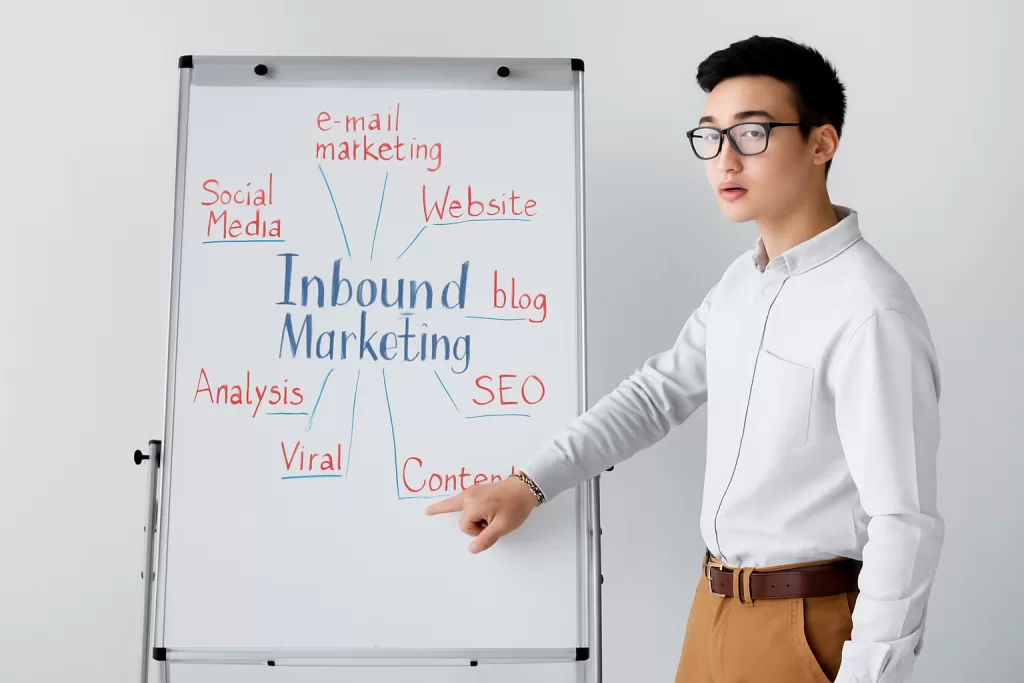 Understanding B2B Inbound Marketing
Definition and Benefits
B2B inbound marketing focuses on attracting business clients through engaging content. It contrasts with outbound methods that disrupt with ads. Instead, inbound pulls prospects in by addressing their needs and pain points.
One major benefit is cost-effectiveness. Inbound marketing often costs less than traditional advertising. You attract high-quality leads without large financial outlays.
Another advantage is building trust over time. Providing valuable content positions your business as an industry leader. Prospects are more likely to engage with a brand they trust.
Inbound marketing also enhances brand visibility. By consistently sharing high-quality content, you increase your online presence. This visibility helps prospects find you when they need solutions.
Moreover, inbound marketing supports long-term relationships. By nurturing leads through valuable content, you create lasting connections. This approach fosters loyalty and repeat business.
Importance of B2B Inbound Marketing
Understanding the significance of inbound marketing is crucial. It offers a tailored approach that aligns with the unique needs of B2B businesses. Traditional outbound methods often fall short in this context.
Inbound marketing allows for precise targeting. You attract companies that can truly benefit from your services. Tailoring content to specific industries helps capture the right audience.
Let’s consider why businesses choose inbound strategies:
- Efficiency: It eliminates wasted effort on uninterested leads.
- Scalability: Inbound methods adapt easily as your business grows.
- Measurable Results: Analytics tools offer insights into campaign success.
Additionally, inbound marketing cultivates a valuable dialogue with potential clients. It encourages a two-way conversation, allowing for greater engagement. This interaction is key to understanding client needs and refining your services.
Furthermore, inbound marketing contributes to a stronger sales pipeline. By nurturing leads through content, you prepare them for conversion. This readiness increases the likelihood of successful deals.
In essence, B2B inbound marketing is invaluable for businesses aiming to grow sustainably. It provides the tools to create meaningful relationships and foster long-term success. Through strategic use of content, businesses can achieve their goals and exceed expectations.
 Identifying Your Business Needs
 Identifying Your Business Needs
Assessing Your Marketing Goals
Identifying marketing goals is fundamental for success. Clear goals shape your strategy and drive results. They provide direction and focus for your B2B inbound marketing efforts.
First, consider what you aim to achieve. Do you want to increase brand awareness or boost lead generation? Your objectives will influence your marketing tactics.
Next, analyze your current position. Assess your existing resources and capabilities. Understanding where you stand helps set realistic and achievable goals.
When setting objectives, ensure they are SMART: Specific, Measurable, Achievable, Relevant, and Time-bound. This framework ensures clarity and focus in your planning.
Here are key considerations when setting goals:
- Specificity: Clearly define what you want to achieve.
- Measurability: Determine how you’ll track progress.
- Achievability: Set goals that challenge yet remain reachable.
- Relevance: Align goals with your broader business mission.
- Time-frame: Establish a deadline to maintain urgency.
Additionally, consider the broader market landscape. Competitors, industry trends, and client demands shape your strategy. Staying informed ensures your goals remain relevant.
Finally, reassess your goals regularly. The business environment is dynamic and changing. Regular reviews help ensure your strategy stays aligned with your objectives.
Understanding Your Target Audience
Understanding your target audience is crucial. It enables you to craft messages that resonate and convert. Without this understanding, your marketing efforts will likely miss the mark.
Start by building detailed buyer personas. These profiles represent your ideal clients. Consider factors like industry, company size, and decision-making roles.
Dive deeper into understanding their challenges and motivations. What problems do they face, and what solutions do they seek? Insight into their pain points guides your content development.
Additionally, consider their content preferences. Different audiences consume content in varied ways. Some prefer detailed reports, while others favor concise videos.
Here’s a quick checklist for understanding your audience:
- Demographics: Industry, size, and location.
- Challenges: Pain points and needs.
- Behavior: Online habits and content consumption.
- Motivations: What drives their decisions?
Engage with your audience to gather insights. Surveys, interviews, and feedback forms can provide valuable data. These tools deepen your understanding of their needs.
Finally, remain adaptable. Audience preferences evolve over time. Stay responsive to these changes to maintain engagement and relevance.
In summary, a firm grasp of your target audience enhances your marketing strategy. This understanding enables effective content creation and strengthens client relationships, propelling your business forward.
Key Services Offered by B2B Agencies
 Key Services Offered by B2B Agencies
Overview of B2B Marketing Services
B2B marketing agencies provide a broad range of services. These services are tailored to drive business growth and achieve marketing objectives. From strategy to execution, each service plays a critical role.
Content marketing is a cornerstone of B2B strategy. Agencies create compelling content that educates and engages potential clients. This helps establish authority and build trust.
Search Engine Optimization (SEO) is another vital service. It ensures your content ranks well on search engines. Proper SEO can significantly increase visibility and attract organic traffic.
Lead generation is a primary focus for many agencies. Through targeted campaigns, agencies aim to capture qualified leads. This involves a combination of inbound strategies and marketing automation.
Social media management is also crucial. Agencies curate and manage content across platforms. This helps maintain brand presence and fosters community engagement.
Here’s a list of common B2B marketing services offered by agencies:
- Content Marketing: Creation and distribution of valuable content.
- SEO: Strategies to improve search engine rankings.
- Lead Generation: Campaigns to attract and convert prospects.
- Social Media Management: Building brand presence across platforms.
- Email Marketing: Personalized communication to nurture leads.
In addition, agencies often offer data analytics services. Data-driven insights inform strategy optimization. This ensures decisions are grounded in measurable outcomes.
Lastly, strategic planning ties all services together. Agencies work with clients to develop comprehensive marketing strategies. This holistic approach maximizes effectiveness and aligns with business goals.
Specialization: Technology vs. Creative Agencies
B2B agencies often specialize in specific domains. Two primary specializations are technology and creative. Understanding these distinctions helps in selecting the right partner.
Technology-focused agencies excel in digital tools. They are adept at leveraging platforms and automation. Their expertise lies in integrating technology with marketing to drive efficiency.
These agencies often partner with tech companies. Their services include software deployment and CRM integration. This specialization ensures that technological trends are harnessed effectively.
On the other hand, creative agencies emphasize innovation and brand storytelling. They focus on crafting memorable brand experiences. Design, messaging, and aesthetics are their focal points.
Creative agencies excel in brand positioning. They develop unique strategies that elevate brand identity. Their work often involves visual design, branding, and content creation.
Key differences between technology and creative agencies include:
- Technology Agencies: Tech integration, automation, CRM expertise.
- Creative Agencies: Branding, design, storytelling.
Both specializations bring distinct advantages. Technology agencies boost efficiency and data utilization. Creative agencies enhance brand perception and audience connection.
Selecting between them depends on your business needs. If tech integration is crucial, a technology agency might be ideal. For brand building, consider a creative partner.
In summary, choosing the right specialization requires understanding your priorities. Both technology and creative agencies offer valuable services, but aligning them with your goals is key.
Evaluating Potential Agencies
Criteria for Choosing a B2B Digital Marketing Agency
Choosing the right B2B digital marketing agency is a significant decision. It impacts your marketing success and business growth. Therefore, evaluating potential agencies requires careful consideration.
First, assess the agency’s industry expertise. Agencies with experience in your sector understand unique challenges. They are better equipped to develop effective strategies.
Another important factor is their track record. Look for proven results in past campaigns. Successful case studies can be a good indicator of their capabilities.
Consider the range of services offered. An agency offering comprehensive services is beneficial. It ensures consistency across your marketing efforts.
Evaluate the agency’s team expertise. Skilled professionals bring valuable insights. Their experience can greatly influence campaign outcomes.
Understanding technology integration capabilities is crucial. Agencies that effectively integrate tech tools enhance marketing efficiency. This is particularly important in today’s digital landscape.
Communication is key in any partnership. Ensure the agency is responsive and transparent. Good communication fosters a collaborative relationship.
Lastly, consider the agency’s cultural fit. Partnering with an agency aligned with your values ensures smoother collaboration. It also fosters a positive working relationship.
Here’s a checklist for evaluating potential B2B digital marketing agencies:
- Industry Expertise: Familiarity with your market sector.
- Proven Track Record: Successful past campaigns and case studies.
- Comprehensive Services: A wide range of marketing services.
- Team Expertise: Experienced and knowledgeable professionals.
- Tech Integration: Proficiency in marketing technologies.
- Communication: Transparent and responsive interaction.
- Cultural Fit: Alignment with company values and culture.
In summary, a well-rounded evaluation ensures you choose the right partner. A strategic and thoughtful approach can lead to a successful collaboration.
Questions to Ask During Initial Consultations
During initial consultations, asking the right questions is essential. These questions reveal the agency’s approach and capabilities. They help you gauge how well the agency aligns with your needs.
Begin by inquiring about their process. Understanding how they develop strategies is critical. It gives insight into their planning and execution approach.
Ask about their experience with inbound marketing. An agency well-versed in inbound techniques can drive better results. This includes content creation, SEO, and lead nurturing.
Discuss the agency’s approach to measuring success. Metrics and reporting practices are vital. They ensure transparency and track campaign effectiveness.
Explore their adaptability to market changes. An agile agency can pivot strategies when necessary. This adaptability is crucial in a dynamic market environment.
Inquire about their client retention and satisfaction rates. High client retention signals positive relationships. Satisfied clients often reflect successful outcomes.
Finally, ask about their approach to innovation and creativity. Agencies that prioritize innovation often deliver unique solutions. Creativity is a key factor in standing out in a competitive market.
Here’s a list of questions to consider during consultations:
- Process Understanding: How do you develop and execute strategies?
- Inbound Expertise: What is your experience with inbound marketing?
- Success Measurement: How do you track and report campaign success?
- Adaptability: How do you handle changing market conditions?
- Client Satisfaction: What is your client retention rate, and why?
- Innovation Approach: How do you prioritize creativity and innovation?
These questions help ensure a thorough evaluation. They provide insight into the agency’s capabilities and fit with your business. A comprehensive understanding leads to more informed decision-making.
Top B2B Marketing Agencies Overview
Highlighting Best B2B Marketing Companies
Finding the best B2B marketing company involves understanding industry leaders. These companies set the benchmark in creativity and results. They provide comprehensive services tailored to B2B needs.
One example of a top agency is known for its exceptional digital marketing prowess. They leverage cutting-edge technology to enhance campaigns. Their focus on innovation drives impressive outcomes.
Another leading agency specializes in inbound marketing strategies. By prioritizing content marketing and lead nurturing, they excel in converting prospects. Their methods have earned them a strong reputation.
Meanwhile, an agency excelling in branding and positioning stands out. They help companies define their brand identity. Through strategic messaging, they boost brand visibility and recognition.
Agencies recognized for industry-specific expertise also rank highly. These agencies understand complex markets like technology or healthcare. Their specialized knowledge equips them to tackle unique challenges effectively.
Furthermore, some agencies are known for their data-driven approach. By focusing on analytics, they ensure strategies are grounded in insights. This focus helps optimize performance and improve ROI.
Lastly, consider agencies that emphasize sustainable practices. These agencies prioritize ethical marketing methods. They align strategies with long-term business goals and social responsibility.
In summary, the top B2B marketing companies often share key traits:
- Innovative Technology Use: Cutting-edge tools and platforms.
- Expertise in Inbound Strategies: Focus on content and conversion.
- Branding and Positioning Strength: Defining brand identity.
- Industry-Specific Expertise: Deep market understanding.
- Data-Driven Focus: Analytics and ROI optimization.
- Sustainable Practices: Ethical and responsible marketing.
Selecting from these top-tier agencies can elevate your marketing efforts. By aligning with industry leaders, businesses gain a competitive advantage. These agencies’ proven records ensure they deliver exceptional results.
Case Studies of Successful Partnerships
Examining successful partnerships offers valuable insights. Case studies reveal how agencies achieve real-world results. They demonstrate the practical application of strategies.
One notable case involves a tech company seeking to expand its reach. A leading B2B agency crafted a digital campaign. This involved SEO optimization and targeted content efforts.
The results exceeded expectations. The tech company saw a significant increase in qualified leads. Increased web traffic translated into higher sales.
In another example, a manufacturing firm aimed to rebrand. An agency known for creative strategies took the lead. By revamping the firm’s brand image, they secured more contracts.
The rebranding campaign was multifaceted. It included new visual identity and refreshed messaging. This comprehensive approach drove impressive growth.
Additionally, a case study highlights an agency specializing in social media. They partnered with a finance firm to enhance engagement. Utilizing strategic social media practices, they broadened the firm’s audience reach.
Social media metrics improved dramatically. The partnership helped establish a stronger online presence. This success contributed to improved client acquisition.
These case studies illustrate effective agency collaboration:
- Tech Company Expansion: Increased leads and web traffic.
- Manufacturing Firm Rebranding: Improved brand image and contracts.
- Finance Firm Social Strategy: Enhanced online engagement.
In conclusion, case studies provide a real-world blueprint. They exemplify how agency partnerships drive success. Learning from these examples can inspire effective marketing approaches.
Making the Final Decision
Weighing Costs vs. Value
Choosing the right B2B inbound marketing agency requires a careful evaluation of costs and value. While costs are an important factor, they shouldn’t overshadow potential value. A high-value agency delivers better results, even if its services aren’t the cheapest.
Begin by analyzing the agency’s pricing structure. Ensure transparency in costs and understand what each charge covers. Hidden fees can lead to budget misalignments later. Clarifying these upfront helps avoid surprises.
Evaluate the depth and breadth of services offered by the agency. Specialized services such as lead nurturing or SEO optimization might carry a higher price. However, their impact on revenue can justify the expense.
Also, consider the agency’s performance metrics. High-quality agencies offer detailed analytics reports, providing insights into campaign progress. These reports should highlight return on investment (ROI) and achieved benchmarks.
Creating a value comparison list may simplify decision-making. Compare agencies based on:
- Services Offered: Range and quality of services.
- Expertise and Experience: Industry knowledge and proven track record.
- Client Testimonials: Past client satisfaction and outcomes.
- Cost Transparency: Clarity and fairness in pricing.
Look at long-term gains, not just immediate cost savings. The right agency should help expand market reach and increase sales. When well-aligned, the agency becomes a pivotal growth driver for your business.
An agency that aligns with your business needs offers unmatched value. Beyond cost, consider cultural fit and shared goals. Collaborating well can lead to sustained success and improved brand positioning.
Securing a Long-Term Partnership
Establishing a successful partnership with a B2B inbound marketing agency requires focusing on long-term goals. An effective partnership goes beyond project-specific outcomes and fosters an enduring business relationship.
Start by assessing the agency’s commitment to ongoing improvement. Agencies focused on continuous learning tend to adapt well to market changes. They should regularly update their strategies and incorporate the latest insights.
Communication styles matter significantly. Open and frequent communication ensures both parties stay aligned. A strong partnership thrives on shared understanding and timely updates.
Evaluate the agency’s understanding of your long-term business vision. Their strategies should reflect your mission and business goals. Agencies that invest time in understanding your vision are more likely to deliver sustainable results.
Look for agencies interested in innovation and mutual growth. A partner agency should present new ideas and strategies. This proactive attitude signifies a focus on evolving with your company.
Building a strong partnership involves:
- Mutual Trust and Respect: Ensuring aligned objectives and open communication.
- Shared Vision and Goals: Understanding and reflecting business ambitions.
- Commitment to Innovation: Investing in the latest strategies and trends.
- Regular Performance Reviews: Ensuring strategies align with evolving needs.
Commitment to these aspects solidifies a durable partnership. A reliable B2B inbound marketing agency acts as an extension of your team. With shared values and effective communication, your business is poised for continued growth.
Ready to Build a B2B Inbound Marketing System That Works While You Sleep?
This isn’t just about more leads. It’s about more qualified conversations, more efficient teams, and more revenue without more hustle.